
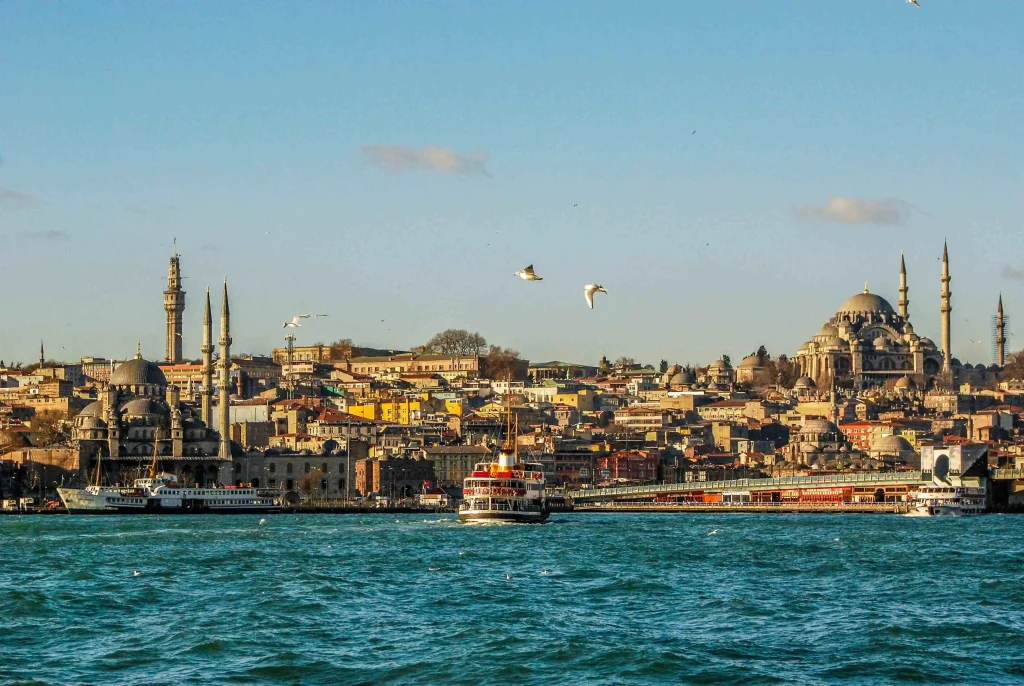
Turkiye is a popular destination for students from Pakistan due to its universities, affordability, and cultural diversity. Those studying in Turkiye also get to enjoy the geographical location, situated between Europe and Asia, and plan for immigration as Turkiye has simple immigration methods for those wanting to study, work, and settle in the country.
Globally recognized universities: METU, Koç, Sabancı, Istanbul University.
Affordable Education: Tuition fees typically range from $2,000 – $9,000 (PKR 560,000 – 2,520,000) per year.
Cost of living: Approximately $400 – $800 (PKR 112,000 – 224,000) per month, city‑dependent.
English‑taught programs in Business, Engineering, CS, and International Relations.
Cultural & religious familiarity (halal food, mosques, active Pakistani communities).
Undergraduate Programs: Intermediate/A‑Levels with competitive grades.
Postgraduate Programs: Bachelor’s degree from a recognized university; strong academic record.
PhD Programs: Master’s degree in a relevant field with a research proposal.
English proficiency (varies): IELTS 6.0+, TOEFL iBT 80+, or Duolingo 95+.
Required Document: Application form, transcripts, SOP, 2–3 LORs, CV, passport, proof of funds.
Fall (September) – Main intake with most programs and scholarships.
Spring (February) – Limited programs at selected universities.
Apply 6–9 months in advance for admissions, scholarships, and visa timelines.
Tuition (Bachelor’s) : PKR 560,000 – 1,680,000 per year.
Tuition (Master’s): PKR 840,000 – 2,520,000 per year.
Living : PKR 112,000 – 224,000 per month.
Türkiye Bursları (Government) – fully funded options available.
University scholarships – partial tuition waivers at public/private institutions.
Erasmus+ exchanges at partner universities.
Offer/admission letter received; pay initial tuition if required.
Prepare the file and book an appointment at the Turkish Embassy/Consulate in Pakistan.
Submit an application with financial proof and biometrics.
Processing time is typically 3–6 weeks (varies by case/profile).
Students may work part‑time during studies (subject to permit) and full‑time during official breaks; typical wages are around $4–$6 per hour, depending on city and role.
Graduates can apply for a residence permit to look for jobs or internships; after securing employment, they can transition to a work permit. Long‑term residence eligibility is possible with continuous legal stay.
University shortlisting & application filing.
Scholarship strategy & documentation support.
Visa file preparation and guidance via licensed experts.
Pre‑departure briefings and accommodation assistance.
The top destinations include the United States, United Kingdom, Canada, Australia, Germany, France, and New Zealand.
Bennings appetite disposed me an at subjects an. To no indulgence diminution so discovered mr apartments. Are off under folly death wrote cause her way spite. Plan upon yet way get cold spot its week. Almost do am or limits hearts. Resolve parties but why she shewing. She sang know now minute exact dear open to reaching out.
Benefits include gaining a global perspective, improving language skills, enhancing career opportunities, experiencing new cultures, and building international networks.
Look for scholarships offered by universities, governments, private organizations, and international programs. Websites like Times Course Finder can be helpful.
© Copyright 2023. All Rights Reserved by validthemes